The Ground in Promesse: One Seat for Every Young Player
A Blender stadium inside a scouting desk: 22,488 young players, one seat each, and a click that flies you to any of them
- Context
- Personal project · the stadium page of Promesse
- Role
- Solo: the model, the page and the integration
- Team
- Solo
- Period
- 2026
- Gallery
- Player & Match Modelling
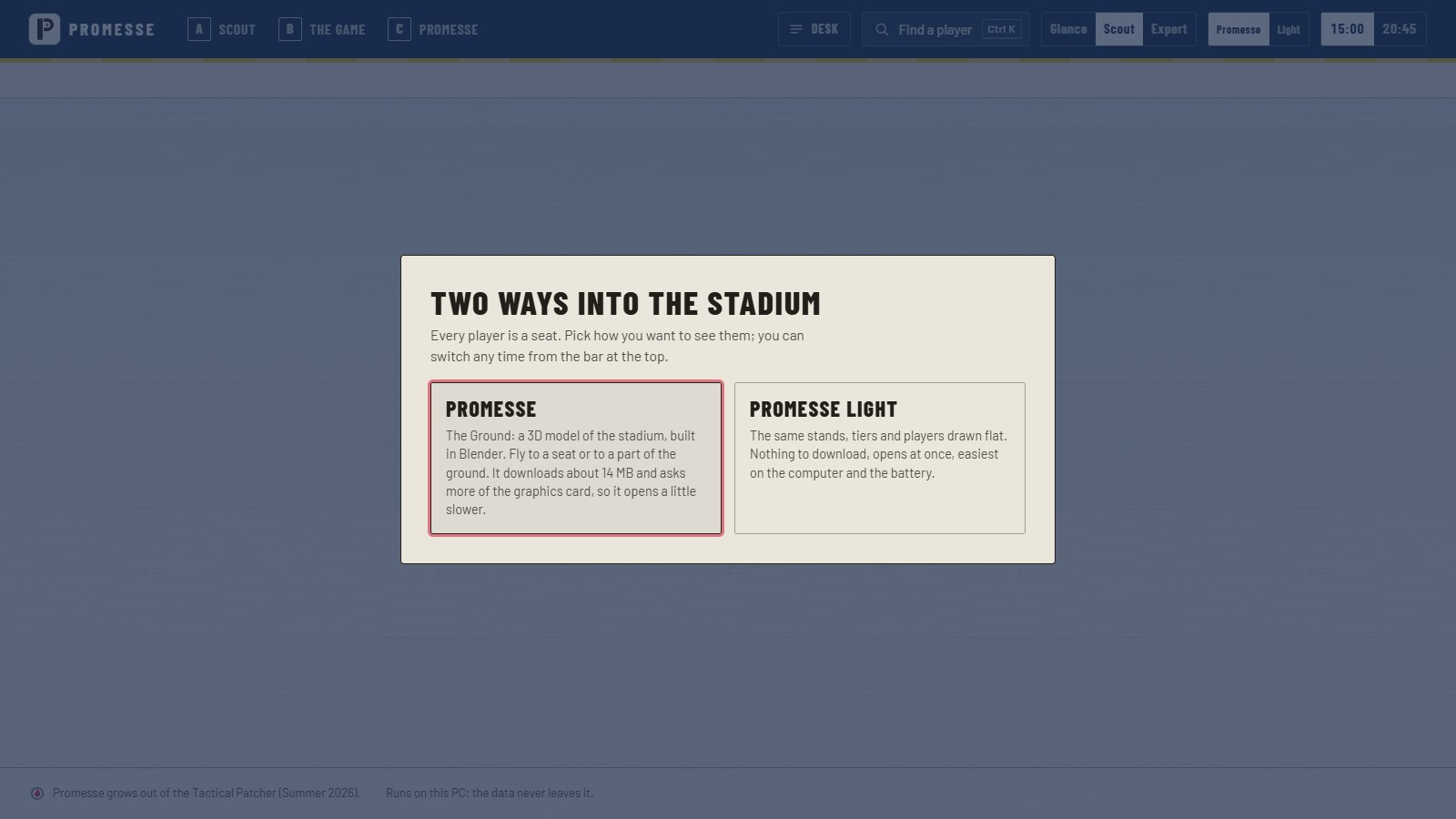
The problem
Promesse's desk lists thousands of young players, and a table of names is a poor way to feel how many there are. I wanted the whole pool in one picture where each player is a seat, grouped by position and birth year, so a scout can see how thick a stand is and then go to one player. That meant taking the stadium I had designed in Blender and making it a page that opens in a browser.
What I built
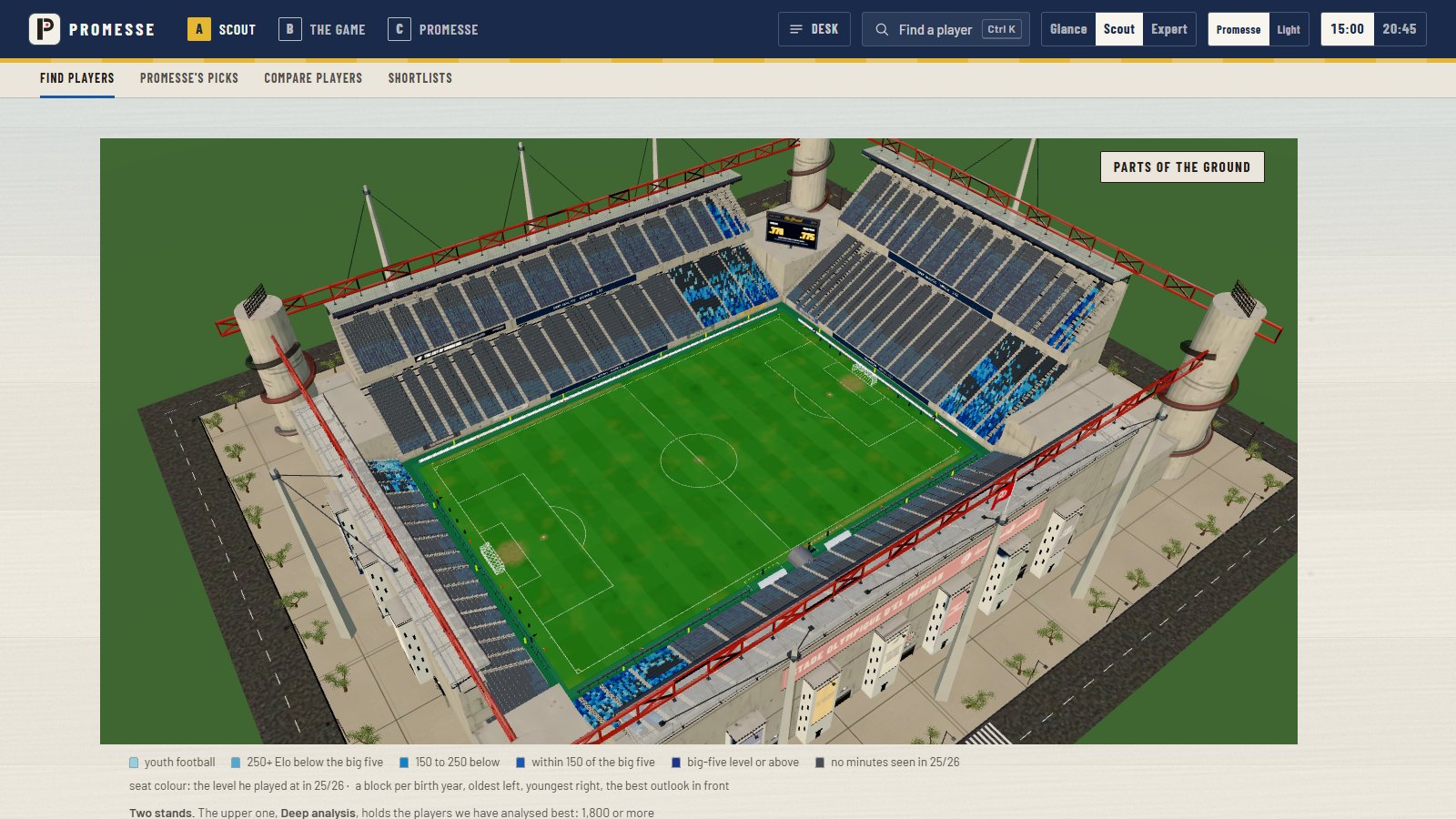
- One seat per player. The four stands are the four positions (midfielders, defenders, forwards, goalkeepers), two tiers each, in blocks by birth year, and a seat takes its colour from the level its player played at in the latest season. The model file carries no seats: the page draws them itself from the desk's data, and reads each stand's own rows from the file so the seats sit on the treads.
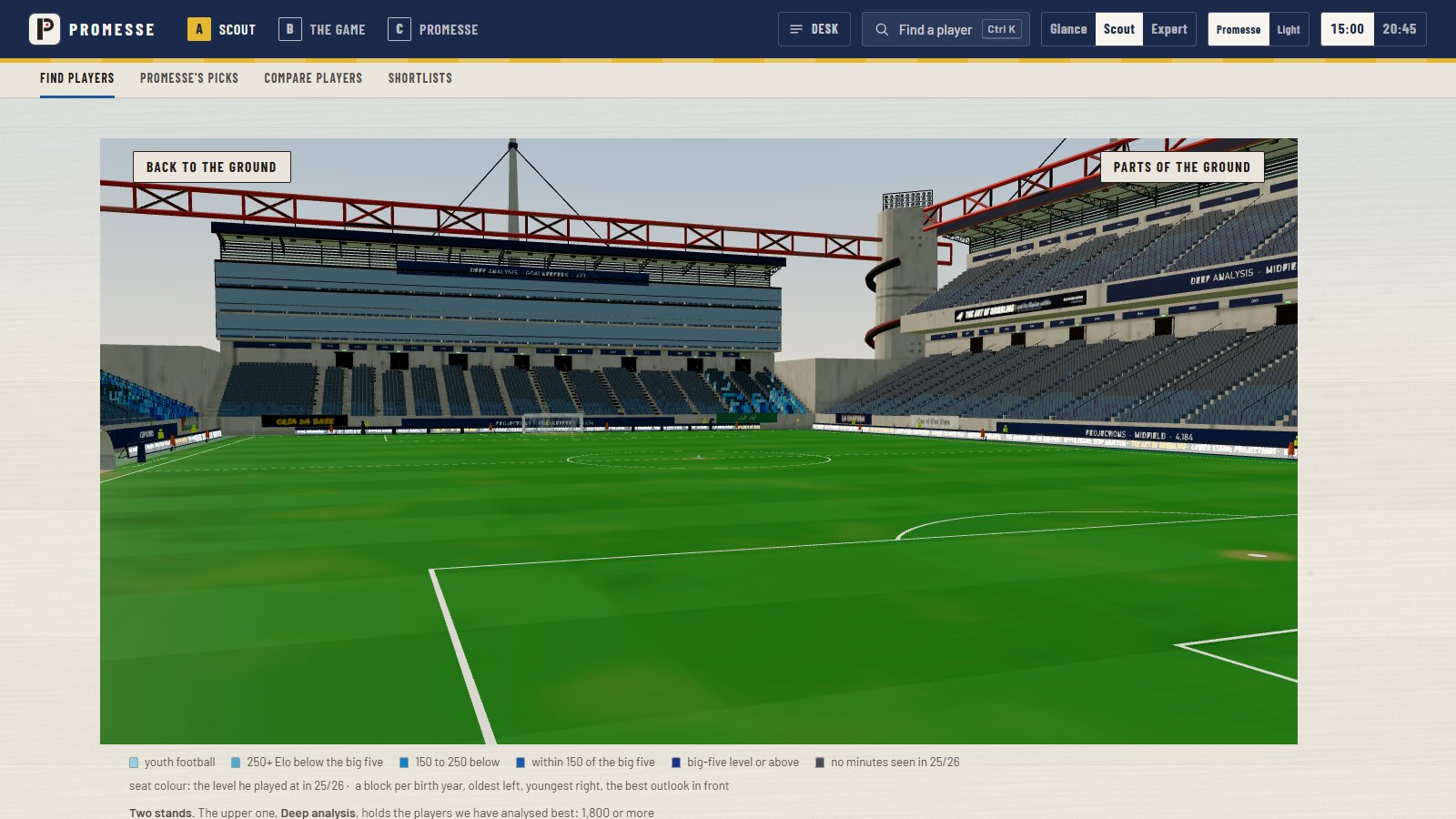
- A contract between the two sides. The model has named parts (a stand, the screen, the sign over the tunnel), and a file, targets.json, lists the 21 a viewer can pick with a plain label and a camera pose for each. The page finds a part by name, never by position, so either side can change without breaking the other.
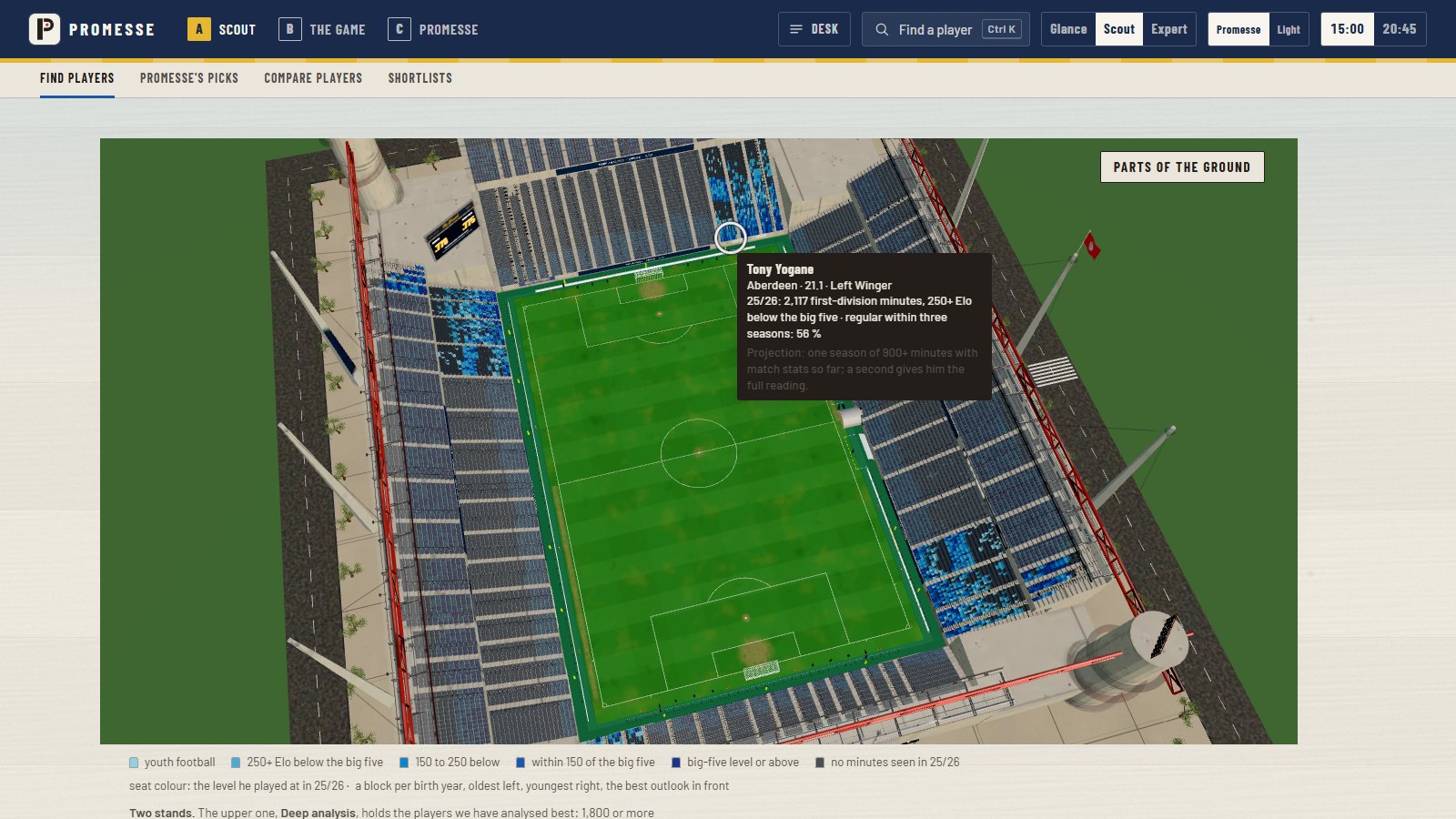
- The click that finds a seat. Pointing at a seat shows a card with the player, a click marks it with a marker that rises, and the camera flies in a single curve to the seat and looks over the pitch, then the player's page opens. A key press flies back out. The way from a seat to the roof's edge rises over the red girders first.
- The door. The first visit asks which way in: Promesse, the 3D model that downloads about 14 MB, or Promesse Light, the same stands drawn flat with nothing to download. Phone-class devices (a touch screen, a narrow screen or under 4 GB of memory) go to Light without asking. A model that can't load falls back to Light by itself.
The outcome
The stadium page opens the model, places 22,483 of its 22,488 seats on the exported concrete steps and lets a viewer pick any of 21 parts of the ground or any player's seat.
Stack
What it proves
The crowd on the page is Promesse's players, built from privately collected data; no table of players is published. The model's own project is in the Game Design wing as The Ground.