The Ground: A Stadium Designed Part by Part in Blender
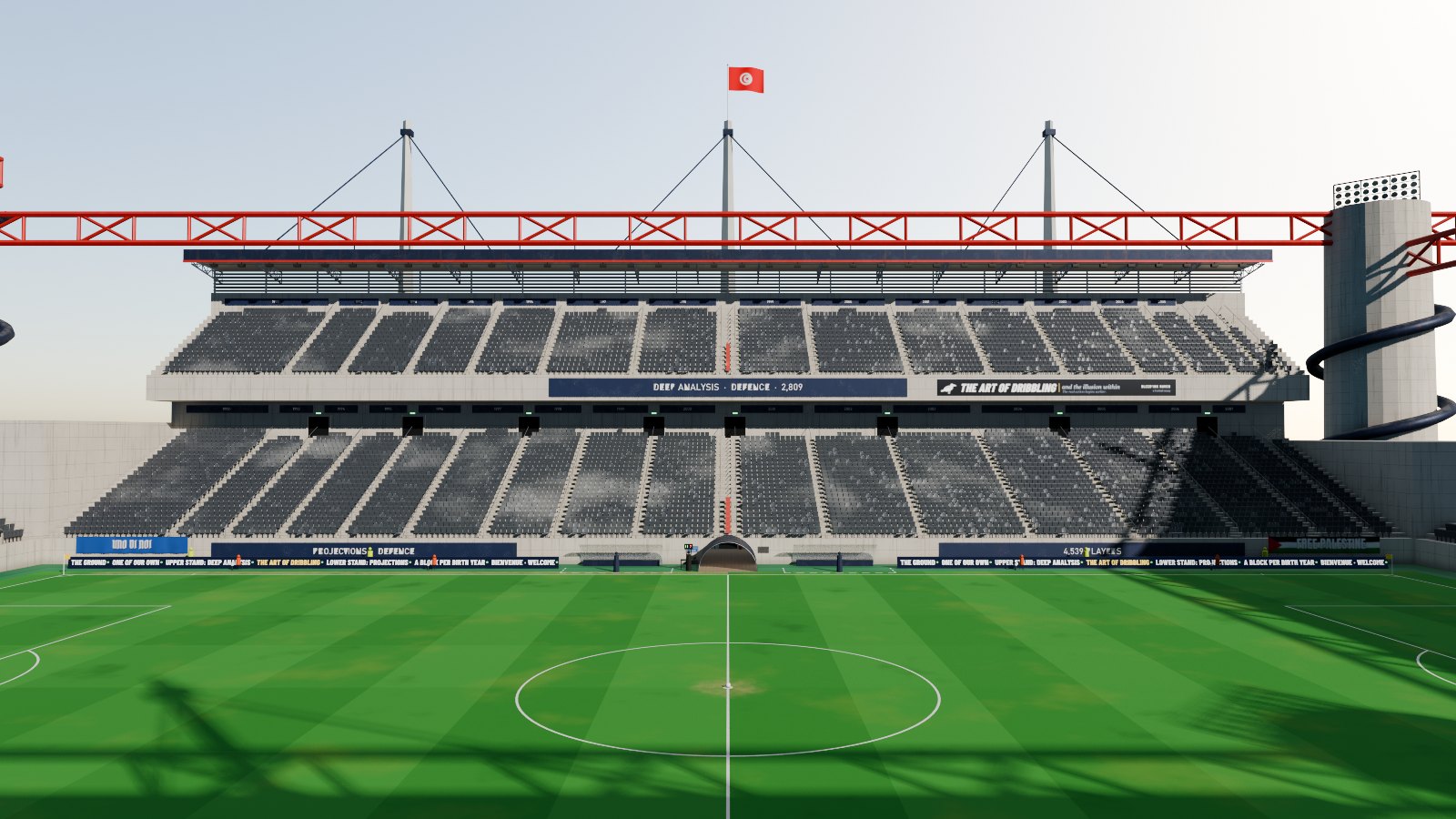
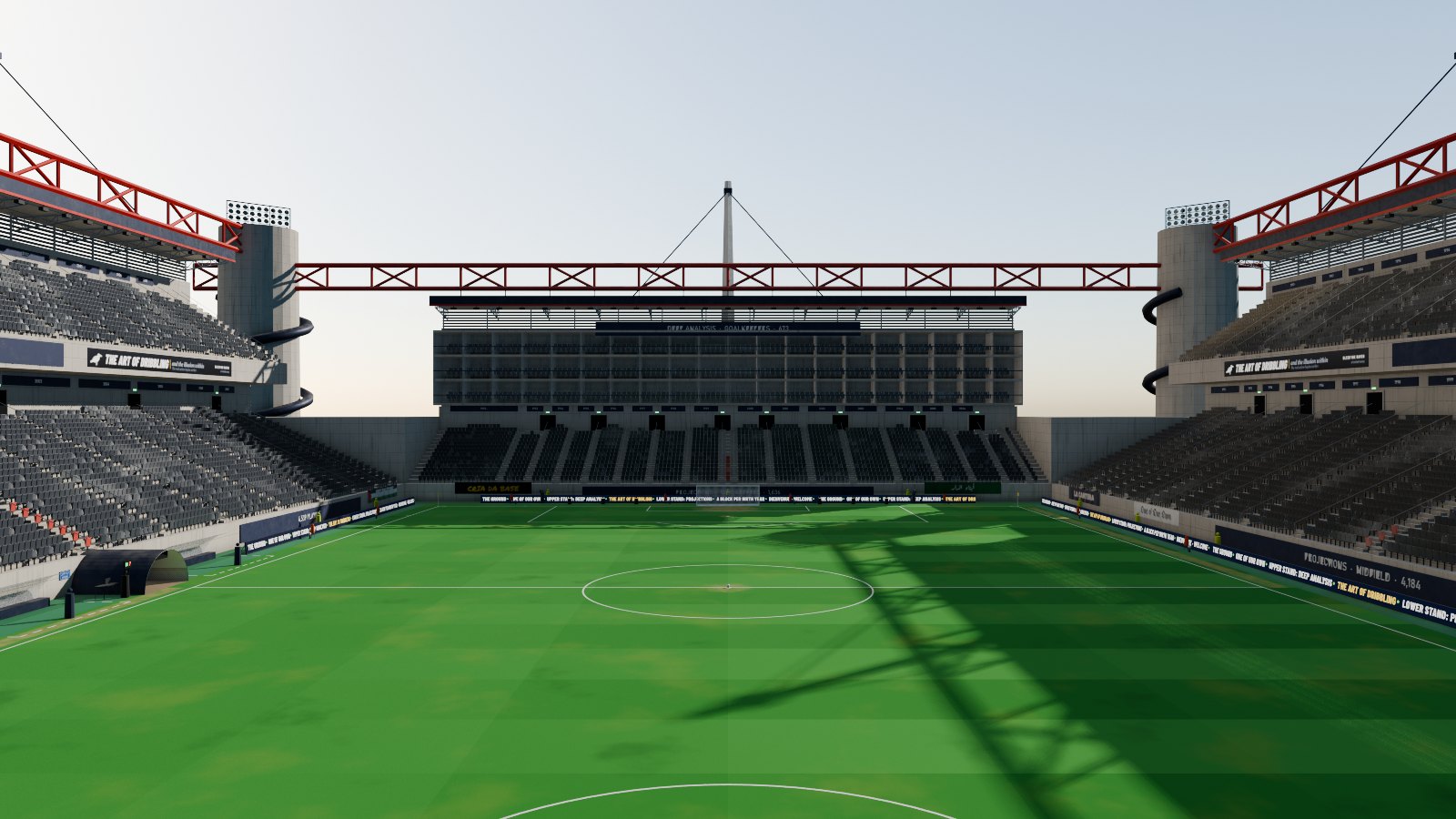
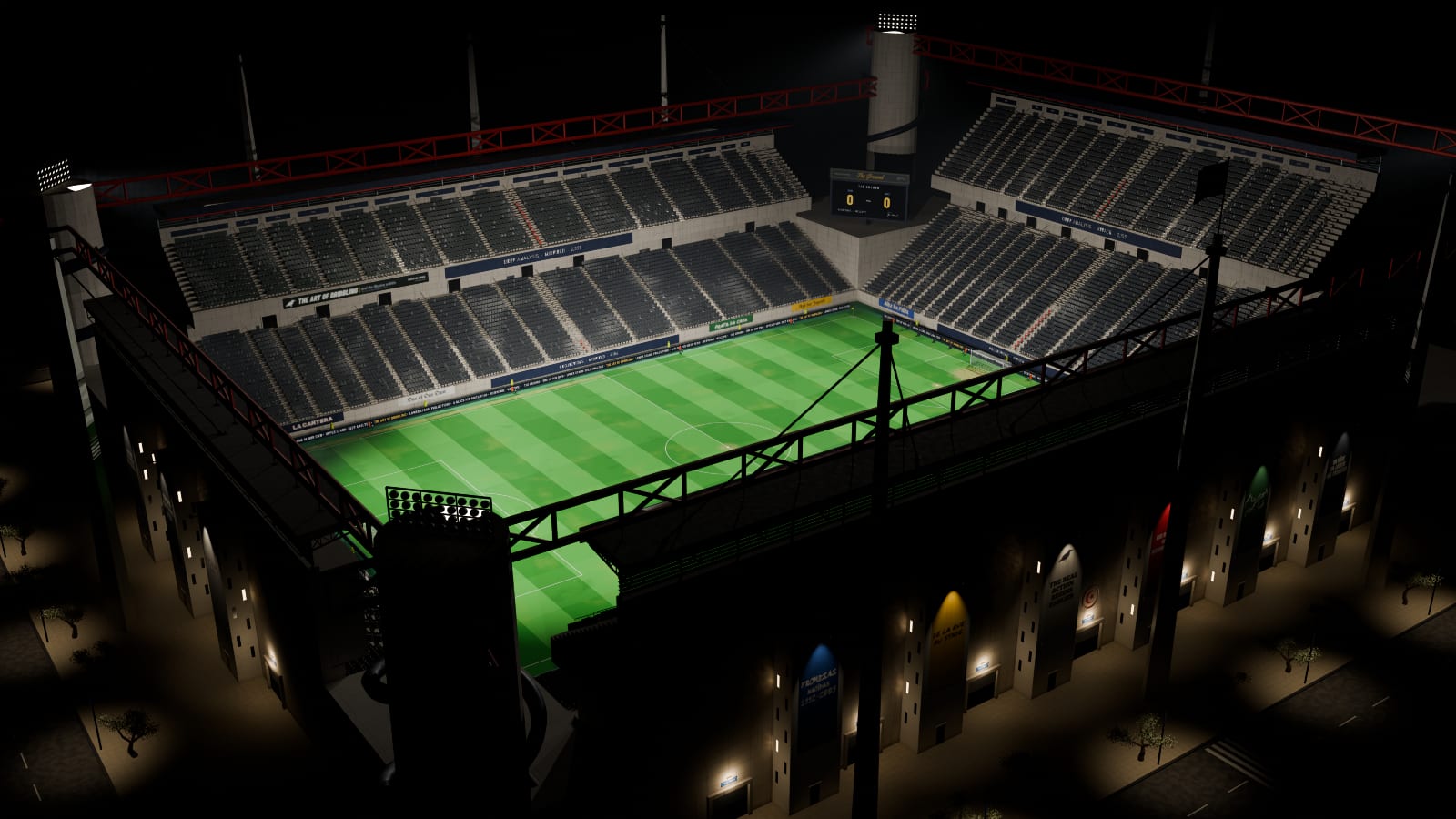
A wild re-imagination of Stade d'El Menzah, designed part by part in Blender, with only the fillers generated
- Context
- Personal project · a Blender stadium, built from one config file
- Role
- Solo: research, design and build
- Team
- Solo
- Period
- 2026
- Gallery
- Game Design
The problem
I wanted to know how football-game modders build a stadium before I built one, and then I wanted a ground that looked made by a person who cared, not assembled from a template. Procedural tools are everywhere in game art now. My view is that hand-designed art is still the most valuable thing in a scene, and that generation earns its place in the fillers, the backgrounds and the stand-ins.
What I built
- Research first. How stadiums get into PES 2021 (through a community tool called Sider) and EA's football games (through Frosty), what a modder's pack holds, and what ground-makers agree on: a stadium is many named parts, lit apart from the pitch, with simple boxes for the ball to touch. I took that structure, and the shapes I quoted from real grounds are each in the research file with the page I read.
- Every part designed on its own. Four stands, one per position on a football team, with two tiers each and the seats in blocks by birth year. A roof of red lattice girders after San Siro's. A north end of glass-fronted boxes after La Bombonera's. Banners in different hands, each the way fans paint theirs. I chose the measurements, looked at a render and corrected by eye until a part read right.
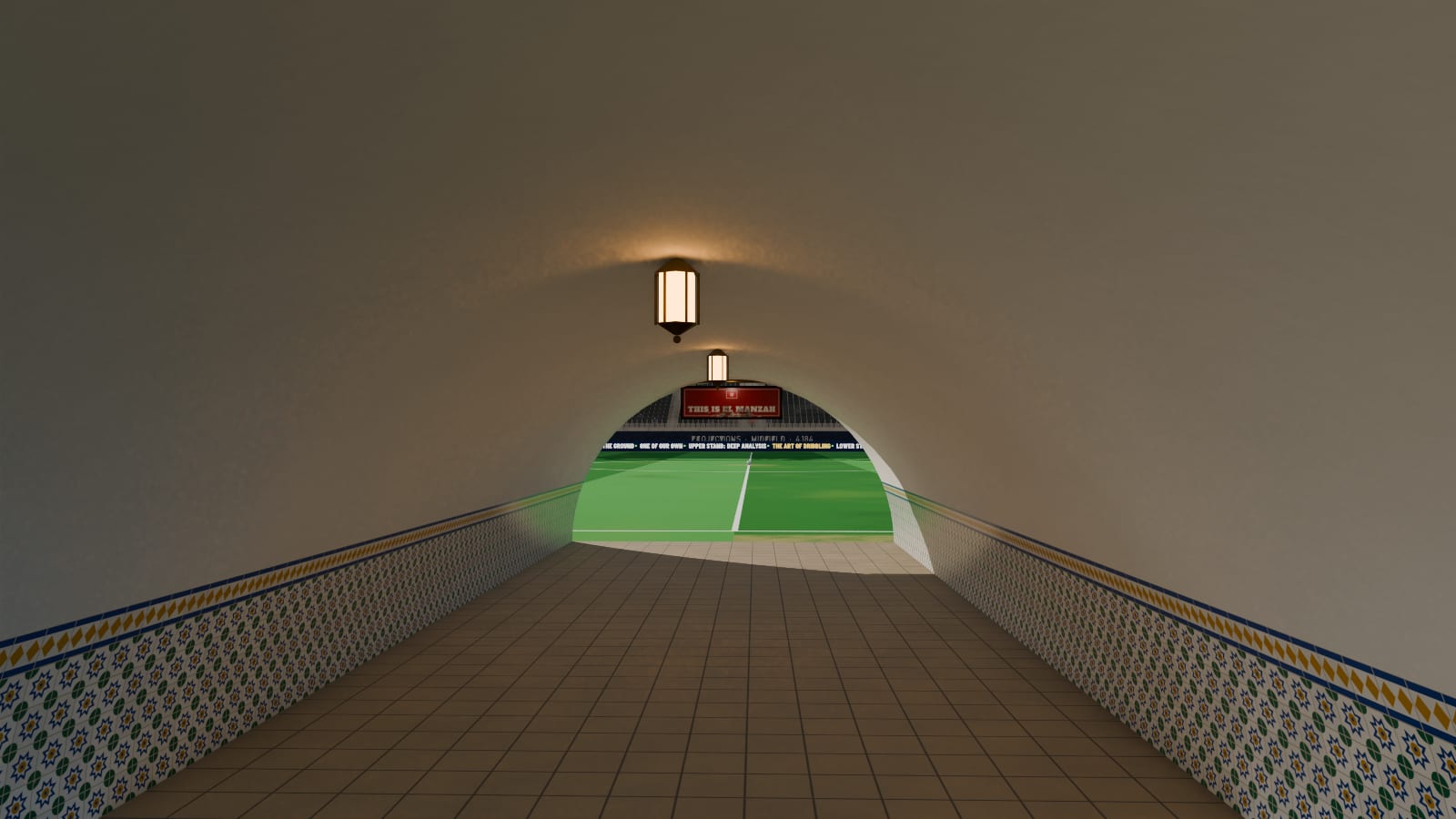
- The walk-out, where the design is most deliberate. A 14-metre tunnel ending in a corner of Sidi Bou Said, and a sign reading THIS IS EL MANZAH, hung 1.9 metres up so a player can reach it. Its paint is worn where a hand lands and nowhere else.
- Procedural work for the fillers. The olive trees along the kerb, a stair light left on here and there, the seats left folded down, a plant's leaves, the sag of the banners' cable ties. Each is generated from a fixed seed so every build grows the same thing. Take them out and the ground is still the ground, only tidier and emptier.
- Everything is written as code, one function per part, from one config file, and Blender runs without a window. The .blend it builds has shader graphs with named frames, baked textures, named cameras and a collection per part, so another artist can open it and change it.
Inside the decisions
Where I generate, and where I don't
Placing a single olive tree by hand is a good use of an afternoon only if there is one. Along a kerb there are dozens, and nobody will look at any one of them. So the trees are generated, with a fixed seed, and so are the few other fillers.
The sign over the tunnel is the opposite case. Players touch it on the way out, so I decided where the paint wears: red worn to rose, then primer, then bare board, with grease round the worn places. Sprinkled everywhere it would have looked like a filter, so it is placed where hands go.
The outcome
A stadium kit and a web model that the Promesse scouting desk opens as its stadium: every one of its 21 named parts can be picked, and each flies the camera to its own view. The model is the same ground in Blender and in the browser.

Stack
What it proves
Every part is designed by me, and only five fillers are generated. The first crowd, Promesse's players, comes from privately collected data and stays private: everything shown here uses plain seats.